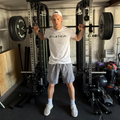




One of the biggest worries about training at home is safety – especially on heavy lifts like squats or bench press with no training partner around.
A good Power Rack can make an enormous difference here. With the right safety features and a bit of know-how, you can train very safely and very effectively on your own.
In this article I'll show you what really matters when it comes to safety, and which pro tips help you keep the risks down.

Why Safety Matters So Much in a Garage Gym
In a commercial gym there's usually someone nearby who can step in if things go wrong. At home you're often training alone.
That makes it critical that your equipment builds in a safety margin from the start and that you know how to behave around it. A high-quality Power Rack with solid safety features gives you exactly that reassurance – and with it the mental freedom to focus fully on the work.
Key Safety Features on Power Racks
Not every rack is equally safe. Look for these features when you're choosing:
1. Sturdy safety bars / Spotter Arms
The single most important safety feature there is. Good Safety Arms should:
- Adjust in height quickly and easily
- Be deep enough for the bar to rest on securely
- Be strong enough to catch your maximum training weight safely
2. Solid build quality and high load capacity
A rack with thicker steel profiles and a higher load rating (as on the R7 and R8 series) simply gives you more safety margin. Stability counts most with heavy weights or dynamic movements.
3. Good hole spacing and adjustability
The finer the hole spacing, the more precisely you can set the Safety Arms to your height and to the lift. That's a noticeable safety gain.
4. Additional safety features
Some systems offer extended safety options such as:
- Safety straps (a softer landing for the bar)
- Additional spotter systems
- Sturdy J-Hooks with a locking mechanism
On Atletica Power Racks, these safety aspects are designed in from day one – from development in Mainz through to final quality control.

Pro Tips for Training Safely at Home
1. Always set the Safety Arms properly
Set the Safety Arms so that you can just barely set the bar down at the lowest point of the movement – without your shoulders or lower back ending up in an awkward position.
2. Never attempt a max without a backup
Even when you feel strong: on new lifts or max attempts, always work with Safety Arms or bring in a spotter if you have one.
3. Technique before weight
Plenty of injuries don't come from weights that are too heavy but from bad technique under fatigue. Nail clean execution first.
4. Keep the space around the rack clear
Make sure you have enough room to bail sideways or backwards if you need to. No loose weights or other obstacles in the immediate area.
5. Check your equipment regularly
Check bolts, Safety Arms and the rack's general stability on a regular basis. Especially on modular systems that you reconfigure often.
6. Add weight slowly and under control
On lifts like squats or bench press in particular, only go up in weight once you can handle your current load safely and cleanly.
7. Have an emergency plan
Think through in advance what you'll do if it goes wrong (the “roll of shame” on bench press, bailing sideways on squats). That confidence is worth a lot.
Common Mistakes You Should Avoid
- Setting the Safety Arms too high or too low
- Going too heavy too soon without solid technique
- Not keeping the space around the rack clear
- Not checking the rack's stability regularly
- Trying to “grind out” one more set when you're already fatigued

Checklist for Safe Training With a Power Rack
- Set the Safety Arms correctly before every heavy lift
- Enough clear space around the rack
- Prioritize technique over weight
- Never train max weights alone without a backup
- Check the rack regularly for stability and loose parts
- When in doubt, take one plate less
- Master your bail-out techniques (the roll of shame, for example)
Bottom Line: Safety Is the Foundation of Long-Term Progress
Good training runs on consistency. And you'll only be consistent if you feel safe.
A high-quality Power Rack with well-thought-out safety features gives you exactly that foundation. Combine it with the right habits and you can train very effectively and very safely on your own at home.
That's precisely why we at Atletica put so much weight on stable construction, good adjustability and well-engineered safety systems.

Want a safe, well-planned setup for your Garage Gym?
Then book a free consultation now. We'll help you find the right system with the right safety features for your situation.
→Book your free consultation now
Or explore the Power Rack series with strong safety features:
- R8 Modular Power Racks
- R7 Power Racks
- R5 Power Racks
Frequently Asked Questions
Are Safety Arms really enough to train alone safely?
Set correctly and paired with sensible weight choices, yes. They're the most important safety component of a good Power Rack.
How often should I check my rack for safety?
At least every 4–6 weeks, and always after you've reconfigured the rack or put it under heavy load.
Is a more expensive rack automatically safer?
Not automatically – but higher quality (thicker material, better build, well-engineered safety systems) usually means more safety margin.
What's the biggest safety mistake most people make?
Setting the Safety Arms wrong, or forgetting them entirely on heavy sets.